




CXC Home | Search | Help | Image Use Policy | Latest Images | Privacy | Accessibility | Glossary | Q&A
1
Chandra Broadband X-ray Image of
W49B
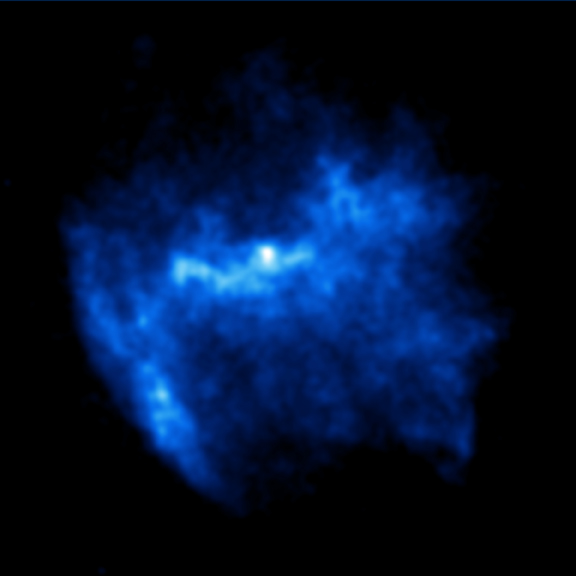
This Chandra X-ray image reveals a barrel-shaped supernova remnant around a glowing bar of intense X-radiation. These X-rays are produced by jets of 15 million degree Celsius gas that is rich in iron and nickel. These features indicate that W49B was produced when the core of a rapidly-rotating massive star collapsed to form a black hole, triggering the ejection of high-energy jets of material.
Scale: Image is 5.7 arcmin per side
(Credit: NASA/CXC/SSC/J. Keohane et al.)
This Chandra X-ray image reveals a barrel-shaped supernova remnant around a glowing bar of intense X-radiation. These X-rays are produced by jets of 15 million degree Celsius gas that is rich in iron and nickel. These features indicate that W49B was produced when the core of a rapidly-rotating massive star collapsed to form a black hole, triggering the ejection of high-energy jets of material.
Scale: Image is 5.7 arcmin per side
(Credit: NASA/CXC/SSC/J. Keohane et al.)
2
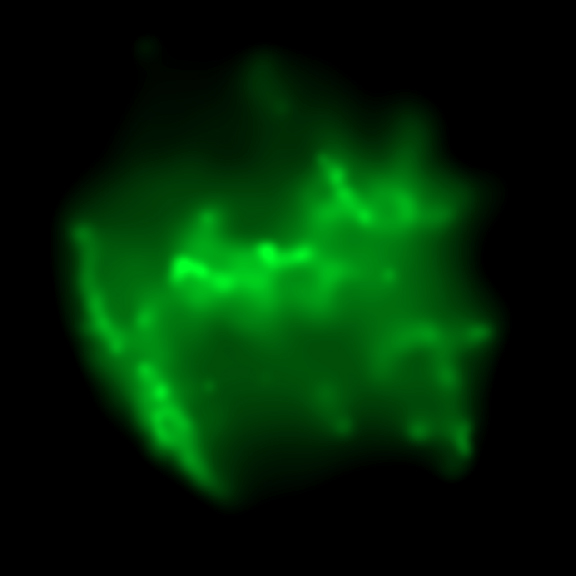
Chandra Fe K-line Image of W49B
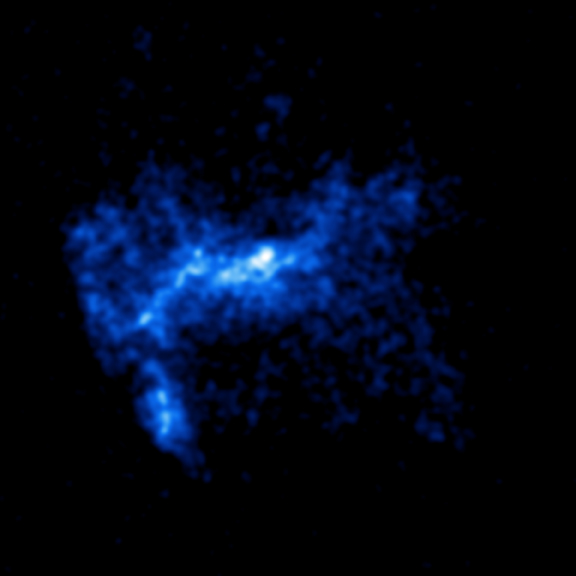
This Chandra image shows the X-rays from hot iron ions that have been stripped of all but their inner electrons, called K-shell electrons. The intensity of the radiation from iron ions, and their concentration in the jet-like feature indicate that W49B was produced when the core of a rapidly-rotating massive star collapsed to form a black hole, triggering the ejection of high-energy jets of iron-rich material.
Scale: Image is 5.7 arcmin per side
(Credit: NASA/CXC/SSC/J. Keohane et al.)
This Chandra image shows the X-rays from hot iron ions that have been stripped of all but their inner electrons, called K-shell electrons. The intensity of the radiation from iron ions, and their concentration in the jet-like feature indicate that W49B was produced when the core of a rapidly-rotating massive star collapsed to form a black hole, triggering the ejection of high-energy jets of iron-rich material.
Scale: Image is 5.7 arcmin per side
(Credit: NASA/CXC/SSC/J. Keohane et al.)
3
Palomar Infrared Images
of W49B
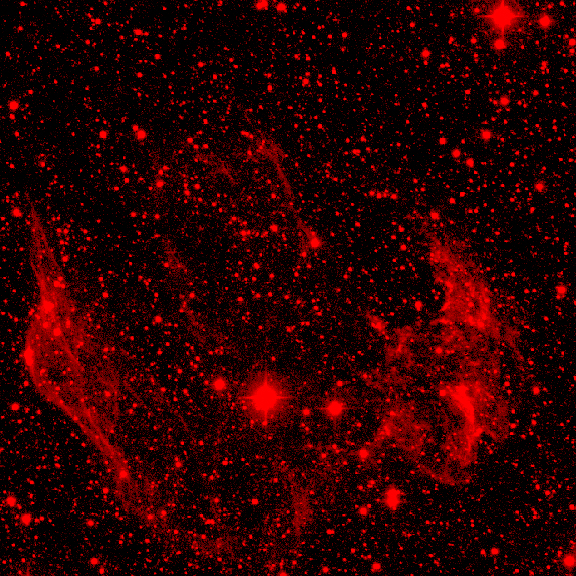
These infrared images, when combined with Chandra X-ray data, help reveal a barrel-shaped supernova remnant consisting of bright infrared rings around a glowing bar of intense X-radiation. The infrared data was observed with the Palomar Hale 200" WIRC (Wide InfraRed Camera).
Scale: Images are 5.7 arcmin per side
(Credit: Caltech/SSC/J.Rho and T. Jarrett)
These infrared images, when combined with Chandra X-ray data, help reveal a barrel-shaped supernova remnant consisting of bright infrared rings around a glowing bar of intense X-radiation. The infrared data was observed with the Palomar Hale 200" WIRC (Wide InfraRed Camera).
Scale: Images are 5.7 arcmin per side
(Credit: Caltech/SSC/J.Rho and T. Jarrett)
4
Chandra 3-Color X-ray
Image of W49B
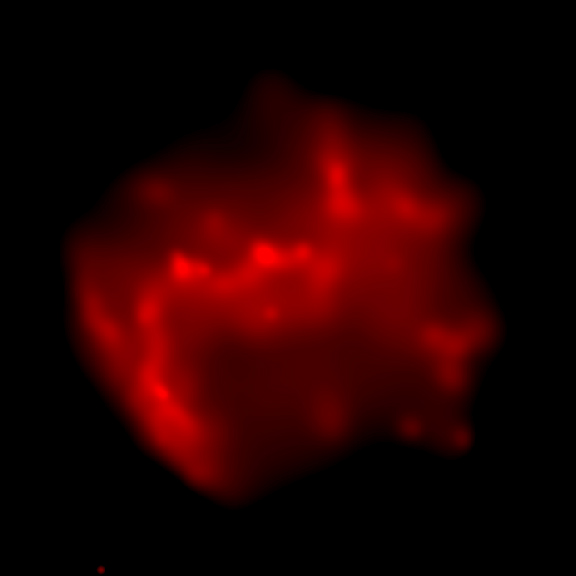
Chandra X-ray data reveal a barrel-shaped supernova remnant around a glowing bar of intense X-radiation. These X-rays are produced by jets of 15 million degree Celsius gas that is rich in iron and nickel. These features indicate that W49B was produced when the core of a rapidly-rotating massive star collapsed to form a black hole, triggering the ejection of high-energy jets of material. The colors red, green and blue in the images correspond to low, medium and high-energy X-rays, respectively.
Scale: Image is 5.7 arcmin per side
(Credit: NASA/CXC/SSC/J. Keohane et al.)
Chandra X-ray data reveal a barrel-shaped supernova remnant around a glowing bar of intense X-radiation. These X-rays are produced by jets of 15 million degree Celsius gas that is rich in iron and nickel. These features indicate that W49B was produced when the core of a rapidly-rotating massive star collapsed to form a black hole, triggering the ejection of high-energy jets of material. The colors red, green and blue in the images correspond to low, medium and high-energy X-rays, respectively.
Scale: Image is 5.7 arcmin per side
(Credit: NASA/CXC/SSC/J. Keohane et al.)
Return to W49B (02 Jun04)


Revised: May 17, 2022