

1
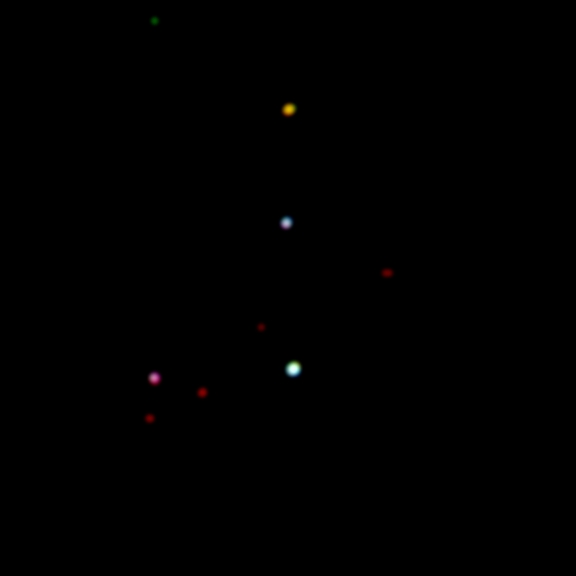
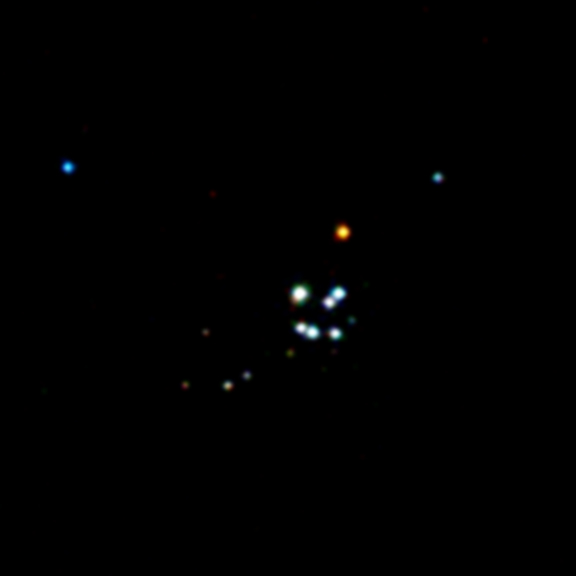
Chandra X-ray Images of NGC 6121 & NGC 6397
These are Chandra X-ray Observatory images of the centers of two globularclusters, NGC 6397 and NGC 6121, located in the Milky Way galaxy. They arepart of a new study that shows globular clusters might be surprisingly lessmature in their development than previously thought.
(Credit: NASA/CXC/Northwestern Univ/J.Fregau )2

The Evolution of a Globular Cluster
Shown here is a sequence of artist's impressions explaining the evolution of a globular cluster. The first graphic shows a globular cluster forming, where single stars are shown in red and double stars in blue. A globular cluster then passes through three main phases of evolution, corresponding to adolescence, middle age, and old age, as shown in the next three graphics. These "ages" refer to the evolutionary state of the cluster, not the physical ages of the individual stars.
In the adolescent phase, the stars near the center of the cluster collapse inward (in more technical parlance this is called "core contraction"). Middle age ("binary burning") refers to a phase when the interactions of double stars near the center of the cluster prevents it from further collapse (the stars in green are those currently undergoing interactions). Finally, old age sets in after the last remaining double star near the center of the cluster is ejected, and the center of the cluster collapses inwards ("core collapse"). The final graphic shows a period of extended old age, when the central region of the cluster expands and contracts ("gravothermal oscillations) after new double stars are formed.
New Chandra results suggest that most globular clusters are in adolescence and a few are in middle age. It was previously thought that most clusters are in middle age and a few are in old age. View animation
(Credit: Northwestern/W.Finney)3

Hubble Optical Image of NGC 6397
This Hubble Space Telescope image shows the core of one of the nearest globular star clusters, NGC 6397. The cluster is located 8,200 light-years away in the constellation Ara. The stellar density is about a million times greater than in our Sun's stellar neighborhood. More information
(Credit: NASA & the Hubble Heritage Team (STScI/AURA))

Return to Globular Clusters (April 28, 2008)




Revised: December 01, 2022