




CXC Home | Search | Help | Image Use Policy | Latest Images | Privacy | Accessibility | Glossary | Q&A
Download Image
More Information
More Images
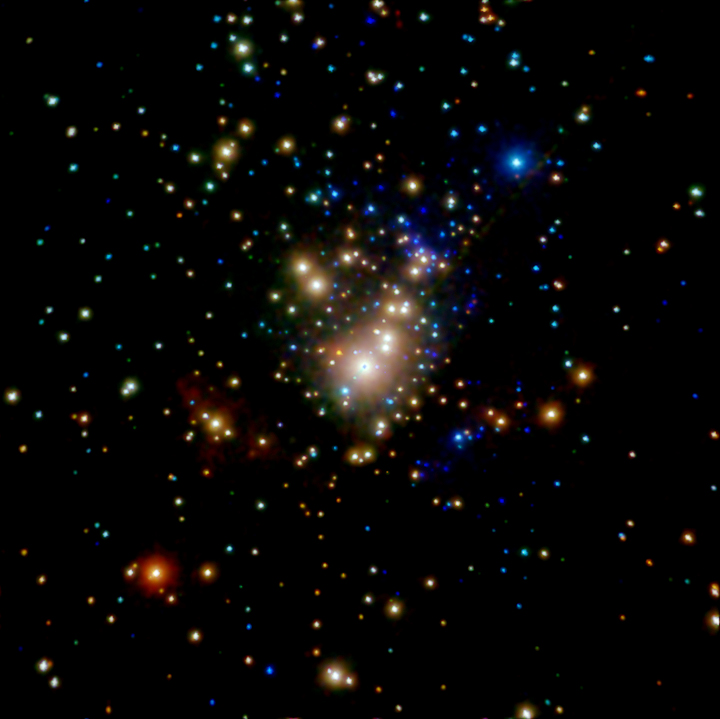
Chandra X-ray Image of
Orion Nebula
Orion Nebula
(Credit:NASA/CXC/Penn State/E.Feigelson & K.Getman et al. )
More Releases
Related Images


Orion Nebula:
Peering into the Orion Nebula

Credit: X-ray: NASA/CXC/Penn State/E.Feigelson & K.Getman et al.; Optical: NASA/ESA/STScI/M. Robberto et al.

Peering into the Orion Nebula
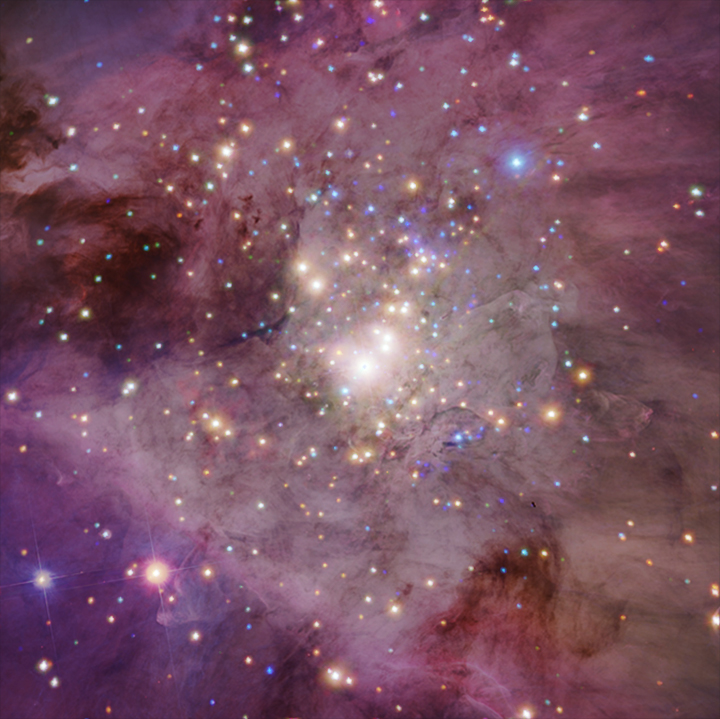
Credit: X-ray: NASA/CXC/Penn State/E.Feigelson & K.Getman et al.; Optical: NASA/ESA/STScI/M. Robberto et al.
Visual Description:
At a distance of about 1,500 light years, the Orion Nebula is one of the closest star formation regions to Earth. This makes Orion — a favorite for amateur astronomers and casual sky watchers — an excellent location to study how stars are born and behave during their stellar childhoods. In this composite image, the central region of Orion is seen as never before through NASA's Chandra X-ray Observatory and the Hubble Space Telescope.
The bright point-like sources (blue and orange) in this image are the newly formed stars captured in X-ray light by a long series of Chandra observations. These nearly continuous observations, lasting almost 13 days, allowed astronomers to monitor the activity of Sun-like stars between 1 and 10 million years old. The fledgling stars were seen to flare in their X-ray intensity much more than our Sun does today. This suggests our Sun had many violent and energetic outbursts when it was much younger. The wispy filaments (pink and purple) are clouds of gas and dust as seen by Hubble in optical light. This gas and dust will one day condense into disks of material from which future generations of stars will be born.
|
||||||||||||||||||||||||||||
Visual Description:
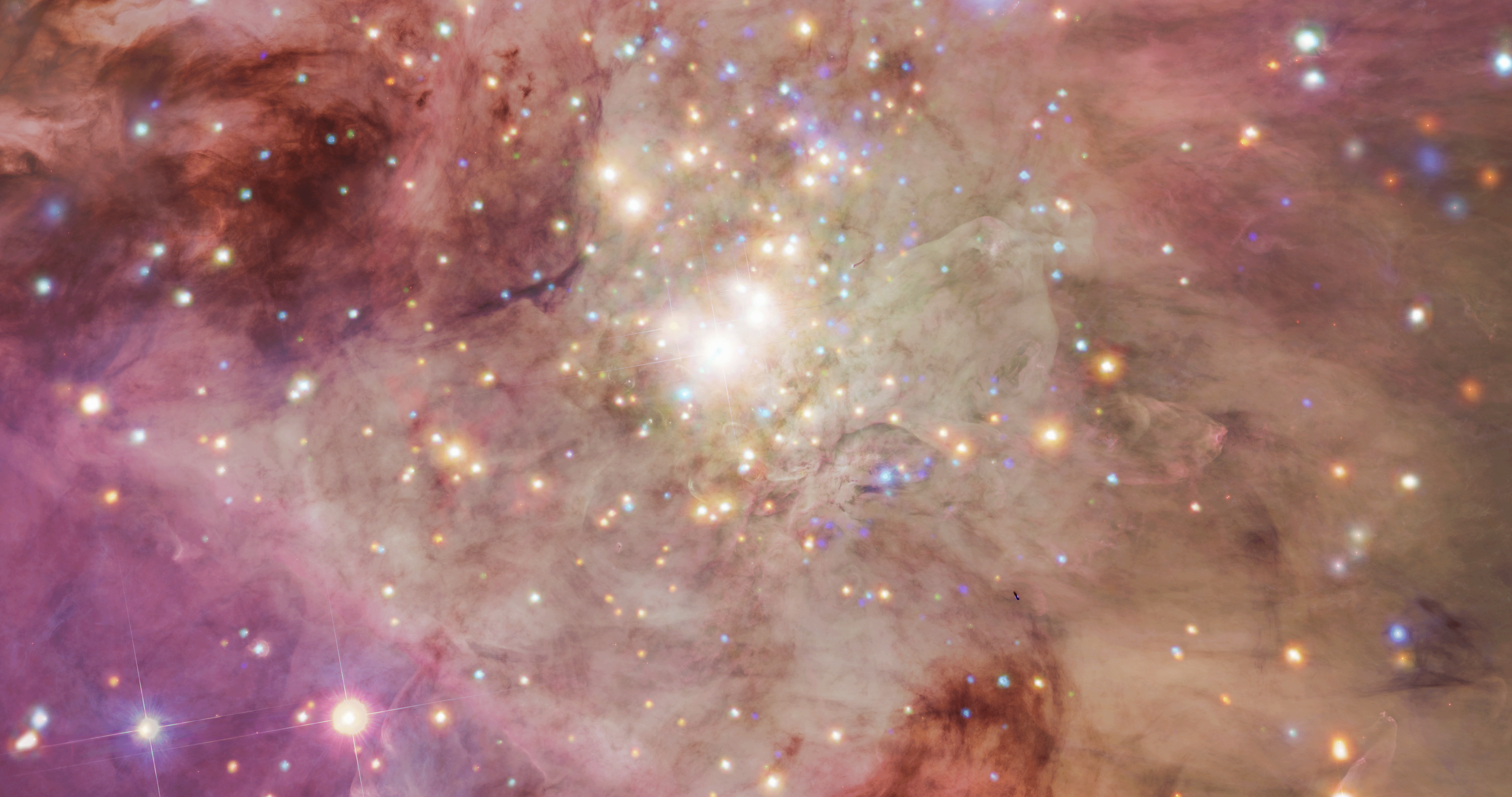
The image features a stunning view of the Orion Nebula, capturing the intricate details of the nebula, and showcasing softer shades of purple, pink, blue, pale gold and white. At the center of the nebula, there is a bright, star-forming region riddled with white pops of light. The image looks dense and filled in, with glowing gas and dust, some dark and dusty clumps, and bright sources that look like many white holiday lights scattered across the image. In this composite image, data was combined from NASA's Chandra X-ray Observatory and the Hubble Space Telescope. Bright point-like sources in blue and orange are the newly formed stars captured in X-ray light by a long series of Chandra observations. The fledgling stars were seen to flare in their X-ray intensity much more than our Sun does today. This suggests our Sun had many violent and energetic outbursts when it was much younger. Wispy filaments (in pink and purple) are clouds of gas and dust as seen by Hubble in optical light. This gas and dust will one day condense into disks of material from which future generations of stars will be born.


Revised: September 03, 2025