
The center of the Milky Way galaxy is a chaotic place. In addition to the 4-million-solar mass black hole, known as Sagittarius A* (Sgr A*), the region is full of gas, dust, strong magnetic fields, and stars in various stages of life — from birth to death.
Now, astronomers have released the clearest view yet of the remains of an exploded star that sits amid this cluttered galactic environment. The supernova remnant is named Sagittarius A East, or Sgr A East, and it is the closest remnant to Sgr A* that astronomers know about.
Sgr A East emits light in many wavelengths, including X-rays that NASA’s Chandra X-ray Observatory can see. Supernova remnants like Sgr A East give off X-rays because powerful shock waves rumble outward into space after the explosion and the stellar debris is superheated to millions of degrees.
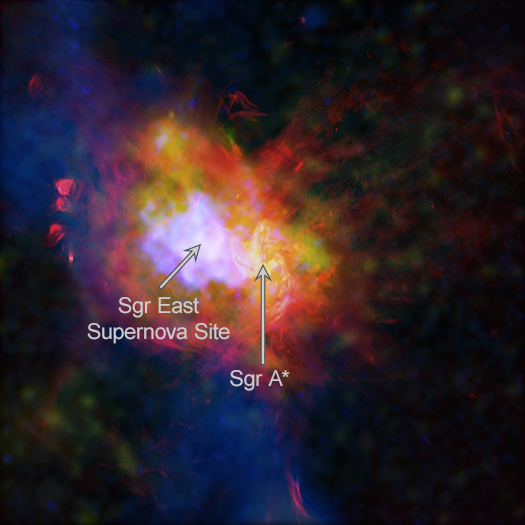
In this packed galactic landscape, it is difficult to tease out what light is coming from the Sgr A East supernova remnant and what emanates from other objects. Astronomers previously have identified the primary contributors. The two main sources of X-rays in this image, besides the supernova remnant itself, are colliding winds from a cluster of hot, massive stars and a diffuse commingled glow from many fainter overlapping X-ray sources. (This latter category is composed mainly of double star systems including stars like our Sun orbiting white dwarf stars.)
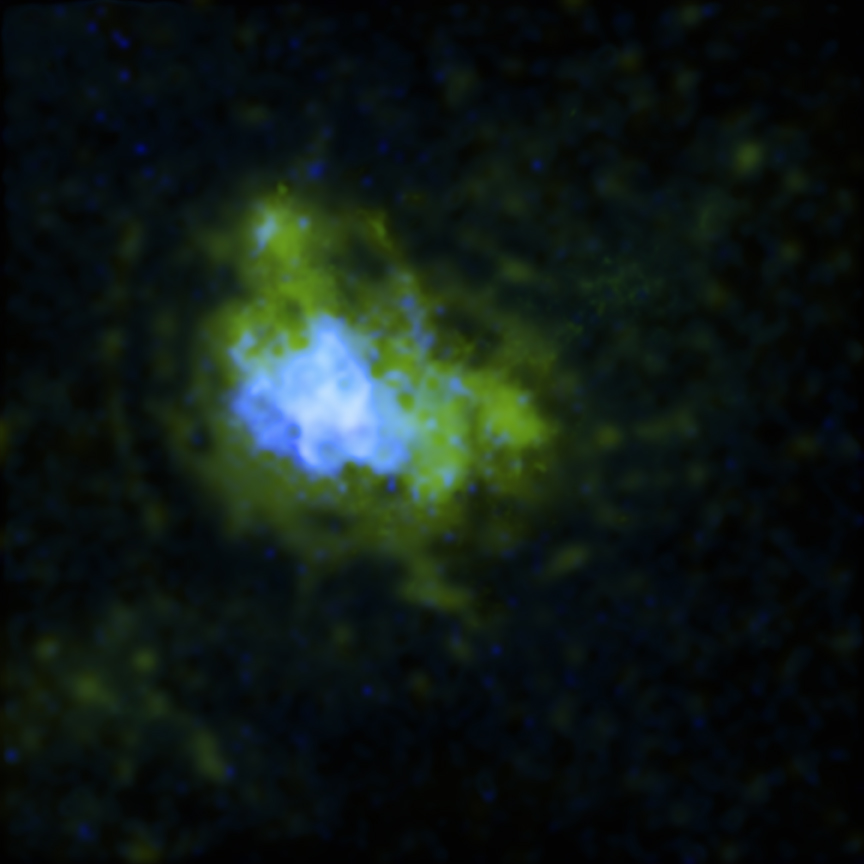
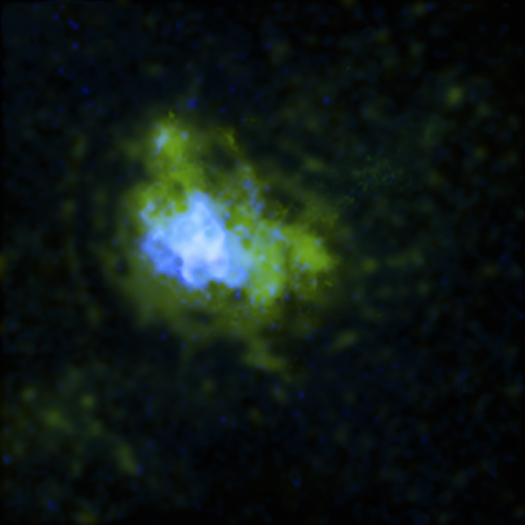
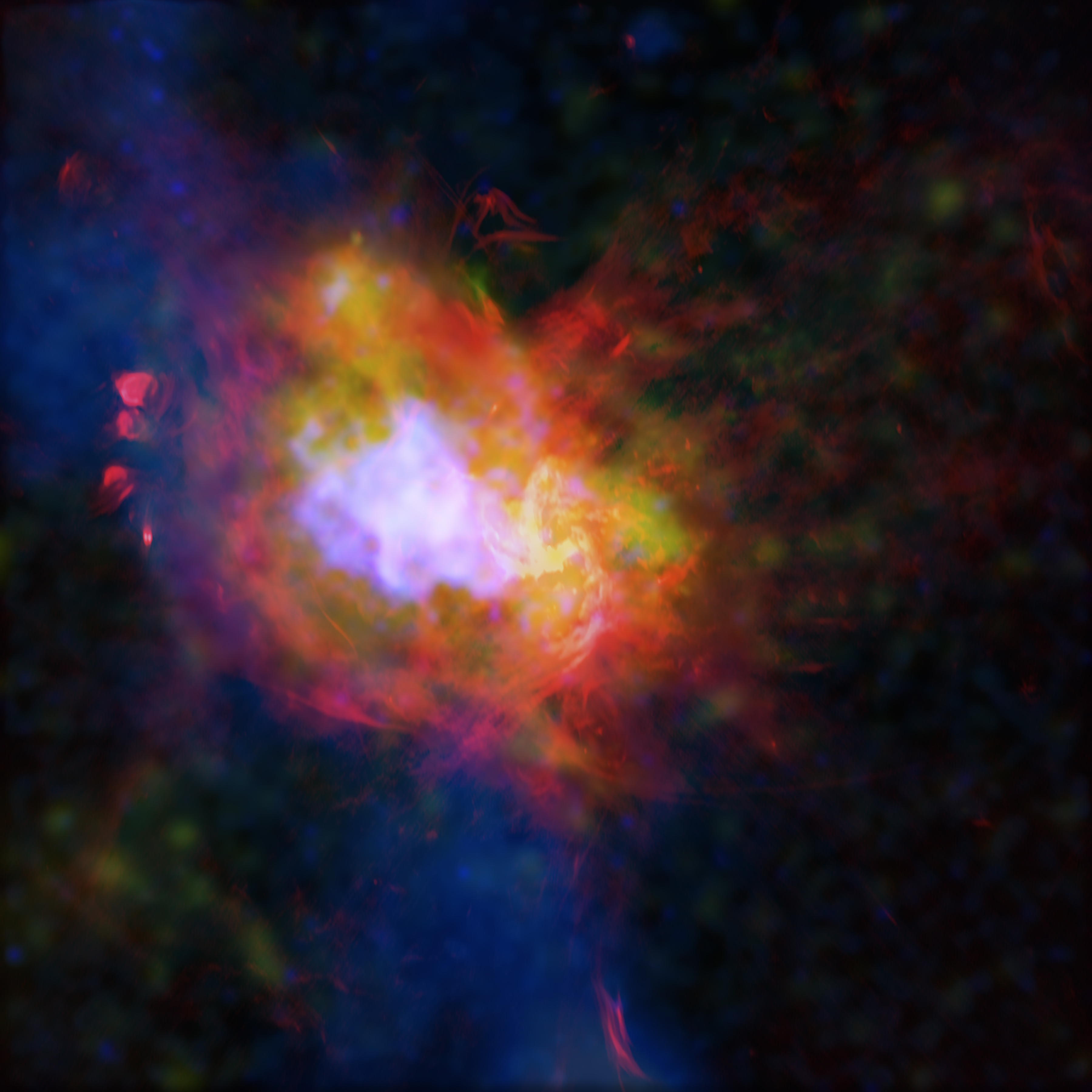
This new composite image of Sgr A East and the region around it contains X-rays from Chandra that are not — for the first time — contaminated by X-rays from other sources in this crowded field. A team of astronomers used a special technique to separate the three main sources of X-rays and create this new cleaner view of Sgr A East. This analysis also allowed the authors to make maps of the elements within the supernova remnant, including iron, sulfur, argon, and calcium.
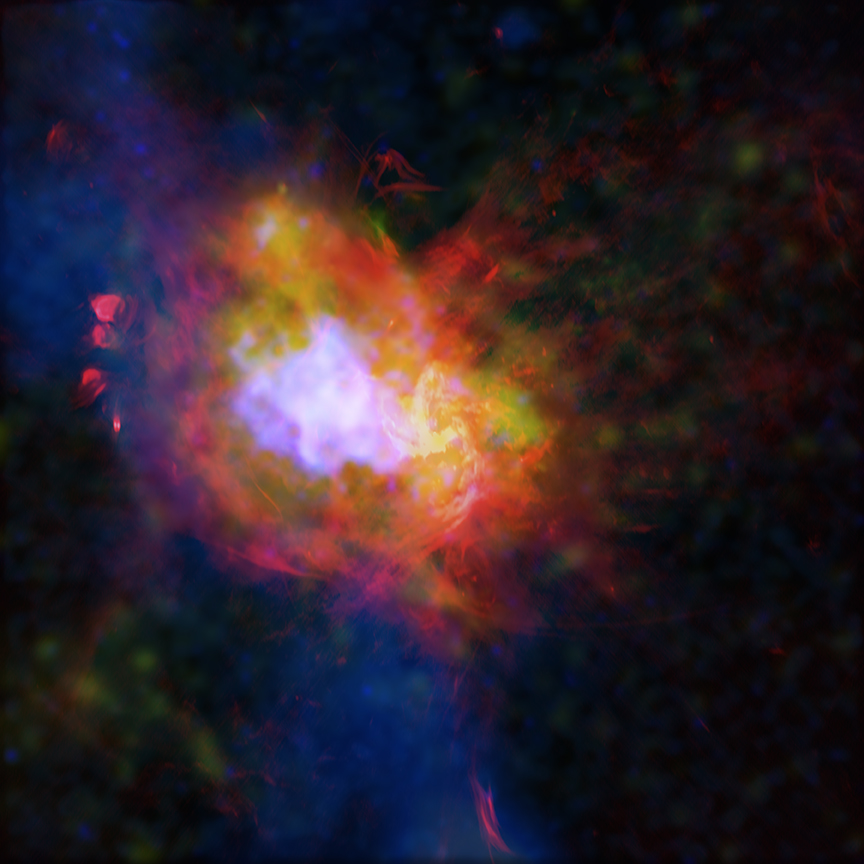
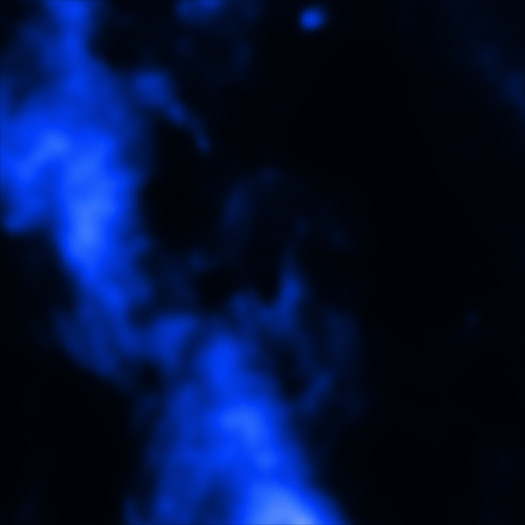
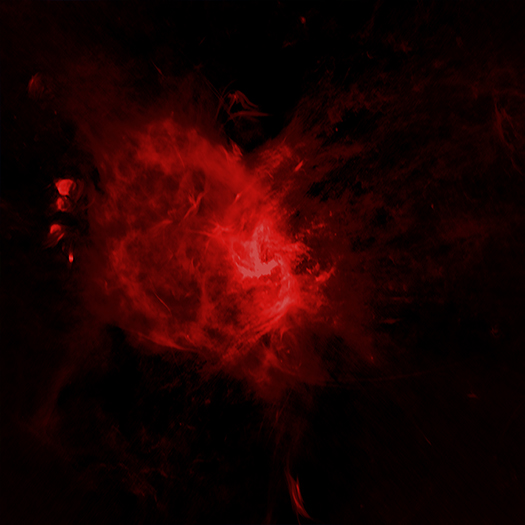
The new image of Sgr A East shows lower-energy X-rays detected by Chandra in green and high-energy ones in light blue, which appear purple in the middle of the supernova remnant. The researchers removed the point-like sources of X-rays so they could study the diffuse emission in more detail. The X-ray data have been combined with radio data from the NSF’s Very Large Array in red and submillimeter-wavelength data from the James Clerk Maxwell Telescope in dark blue to complete this new composite view.
The bright radio emission surrounds X-rays from Sgr A East as well as the region around Sgr A*. The supermassive black hole is located at the center of the yellow spiral structure to the right of the purple X-rays from Sgr A East.
This new image will also allow scientists to examine how the winds from the stars in the nearby cluster have shaped the supernova remnant’s evolution. This could help reveal the identity of the star that exploded to create Sgr A East and whether the supernova remnant has triggered outbursts from Sgr A* in the past.
Because Sgr A East is so close to Sgr A*, astronomers have long wondered if they influence one another. The authors’ new work supports the idea that Sgr A East has played an active role in the black hole’s environment by injecting energy into the region and keeping the gas surrounding Sgr A* hot and turbulent over its lifetime of about 10,000 years, although its exact age remains uncertain. They have shown that Sgr A East has expanded into, compressed and heated the gas surrounding it, shaping its three-dimensional asymmetrical structure.
A paper describing these results with these authors appeared in The Astrophysical Journal, and was led by Mayura Balakrishnan from McGill University in Montreal, Canada.
NASA's Marshall Space Flight Center in Huntsville, Alabama, manages the Chandra program. The Smithsonian Astrophysical Observatory's Chandra X-ray Center controls science operations from Cambridge, Massachusetts, and flight operations from Burlington, Massachusetts.
This release features a composite image of a supermassive black hole and supernova remnant close to each other at the center of our Milky Way Galaxy. In a packed galactic landscape such as this, it is often difficult to discern what light emanates from which object. For this image, astronomers used a special technique to separate the glowing X-ray sources. The result is a picture with distinct elements, and an overall look not unlike an impressionist oil painting with patches of diffused color.
At the heart of the image is a light purple cloud and a spiraling, bright yellow tangle. The purple cloud represents X-rays from the center of the supernova remnant, Sagittarius A East. Inside the bright yellow tangle is the supermassive black hole, Sagittarius A*, which has the mass of 4-million suns. Surrounding the remnants of the exploded star and its black hole neighbor, is a neon red gas cloud with trails drifting toward our upper right. Here, red represents radio data from the NSF’s Very Large Array.
A faint, dark blue cloud, barely discernible when set against the blackness of space, begins at our upper left and exits the bottom of the frame. This is submillimeter-wavelength data from the James Clerk Maxwell Telescope. Mottled, faint patches of forest green stretch across the image from our lower left to our upper right. These are lower-energy X-rays detected by Chandra that are possibly linked to past outbursts from Sagittarius A*.
|
||||||||||||||||||||||||||||||

| Share This |


|